The Doll as a Symbol of Motherhood
The Lost DaughterThe Doll as a Symbol of Motherhood gives material form to the book’s unsettled account of maternal attachment: a doll can be a child’s companion, a mother’s cherished possession, and a contested object through which women recognize or fail one another. Mina and Nani belong to different moments in the narrator’s life, but each reveals how care and resentment, memory and present obligation, become entangled in motherhood.
The Mother’s Doll and the Burden of Care
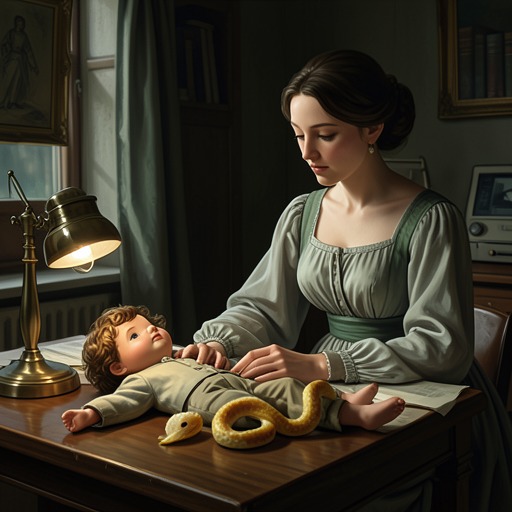
Mina first appears as the narrator’s own childhood doll. When Bianca was small, the exhausted narrator retrieved it from a cardboard box above a wardrobe and gave it to her, hoping the gift might ease Bianca’s envy of her younger sister. She imagined Bianca would cherish Mina as she had once cherished the doll herself. Bianca instead set it aside in favor of a rag doll with yellow yarn hair, and the narrator felt hurt. The mismatch matters: the gift was meant for the daughter, but it also carried the mother’s attachment to her own past.
The conflict sharpened when the narrator found Bianca sitting on Mina on the balcony. At the time, she was short of sleep and money, angry, and unable to make time to take Bianca outside. She scolded her daughter for damaging something precious from her childhood, called her ungrateful, and announced that taking the doll back had been a mistake. Mina thus becomes more than a toy passed between generations: its custody exposes how the mother’s childhood possession can compete with the child’s claim to play and care.
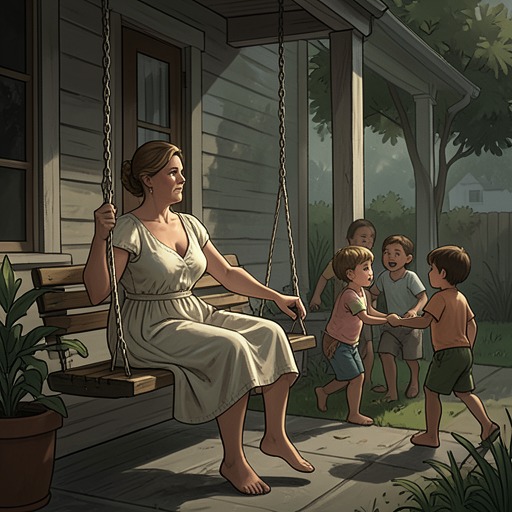
That episode belongs to a wider history of maternal fatigue. The narrator recalls letting Bianca treat her as a doll in games beneath the kitchen table, while she was tired from caring for Marta and trying to keep her nerves under control. When Marta cried, the narrator left Bianca’s game to tend to her younger child; she experienced the interruption as a release, then told herself that the second child, rather than her own choice, had pulled her away. Her memory holds tenderness and evasion together. The doll’s transfer to Bianca takes place within a household where the mother wants to be good and attentive, yet often feels depleted and divided.
Motherhood as Bodily and Social Inheritance
The doll motif resonates with the narrator’s account of pregnancy and reproduction. Looking at Elena beside her parents, she thinks of the urge to fit a child within familiar parental resemblances, even as she understands the child as living matter produced through a long, impersonal chain. Recalling her own pregnancies, she describes the body as changing while the life within it remains both part of her and directed elsewhere. She had Bianca at twenty-three while she and Gianni struggled to keep university jobs; at twenty-five, she planned for Marta, partly in keeping with the belief around them that Bianca needed a sibling.
The pressures of care also shape the narrator’s separation from her daughters and her later return to maternal life. Before leaving for a four-day academic conference in London, she organized food, visits from friends, and backup childcare in case Gianni had work obligations; Marta had a slight cold. After the conference, she pursued work with renewed intensity, and the narrator recalls taking Bianca and Marta with her to a pay phone so that Gianni would not suspect her calls to Hardy. Her daughters were present, silent and bewildered, while she attended to a desire that competed with her family responsibilities. The doll’s significance therefore sits within a larger conflict over who must provide care, and what happens when a mother’s ambitions and needs exceed the time and attention available to her children.
Nani and the Unresolved Demand
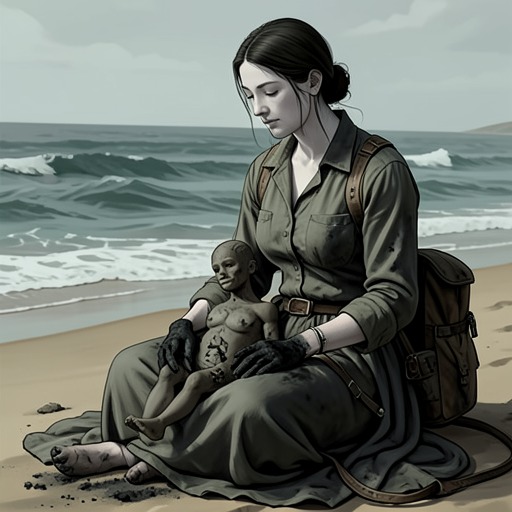
Years later, Nani, Elena’s doll, becomes the focus of the narrator’s involvement with Nina and her family. After returning to the apartment from a distressing encounter on the beach, the narrator finds the doll undressed and head down in the bathroom sink. She dresses it and notices that the water in its stomach has stopped moving. She imagines its womb as dry, then wonders whether Elena would actually be happy to receive the doll again. Her reflection resists a simple equation between returning an object and satisfying a child: a request may express a need that the child has not been able to name.
The doll also helps the narrator see the limits of her position in Nina’s life. Nani is on the kitchen table as she considers how Nina may have regarded her as an ideal mother and as a free, independent woman. The narrator recognizes that she has complicated Nina’s life by taking the doll from Elena, while answering Nina’s anxious questions with reserve. She compares this dynamic to her own brief encounter with Brenda, whom she had invested with a kind of power she wanted for herself. In her account, women can assign one another the role of guide or model, but such identification does not remove the need for each person to take responsibility for her own choices.
That recognition does not settle what the narrator owes Nina. She places Nani upright on a bed, with a pillow behind it and its arms spread, then lies beside it. The gesture resembles the arrangement of dolls in some southern households, but its immediate significance is personal: the narrator is trying to understand the role Nina has asked her to play. The doll is both an object she can arrange and a reminder that her apparent authority has been built on incomplete knowledge of Nina’s risks and circumstances.
Return, Recognition, and Rupture
When Nina comes to the apartment for the keys, the narrator brings Nani from the bedroom as an additional thing to give her. Nina recognizes the doll and understands that the narrator had kept it. Her anger centers not only on the theft but on the concealment: while Elena was crying and Nina was overwhelmed, the narrator saw what was happening and did not tell her she had the doll. The return therefore cannot undo the period of absence or restore trust by itself.
The narrator cannot give Nina a reason for keeping Nani. She acknowledges that her behavior has contradicted the maternal ideal Nina had projected onto her. Nina takes the doll back in a fierce gesture of reclaiming it, rejects the narrator, and leaves without the keys. She also wounds the narrator with the hatpin before running off with Nani. The doll’s return coincides with a rupture rather than a reconciliation: possession changes hands, but the relationship is not repaired.
Significance
Across Mina and Nani, the dolls connect private memory to practical acts of care. Mina carries the narrator’s childhood attachment into Bianca’s early life, where the gift fails to mean what its giver intended. Nani makes the narrator’s concealed intervention in Elena and Nina’s lives impossible to ignore. Neither object provides a stable symbol of ideal motherhood; instead, each exposes the gap between maternal self-image and conduct, between a child’s expressed demand and the less visible need beneath it.
The motif also links generations without treating their experiences as identical. The narrator’s memory of her own mother, her bodily history as a mother, and her encounter with Nina all shape how she interprets the dolls, but they do not excuse her choices or make her an uncomplicated guide. By ending Nani’s passage through the narrator’s hands with Nina’s anger and departure, the book makes the object a witness to care withheld as well as care sought. Its significance lies in that unresolved tension: motherhood appears not as a single feeling or role, but as a contested relation made visible through the objects women give, keep, and take back.